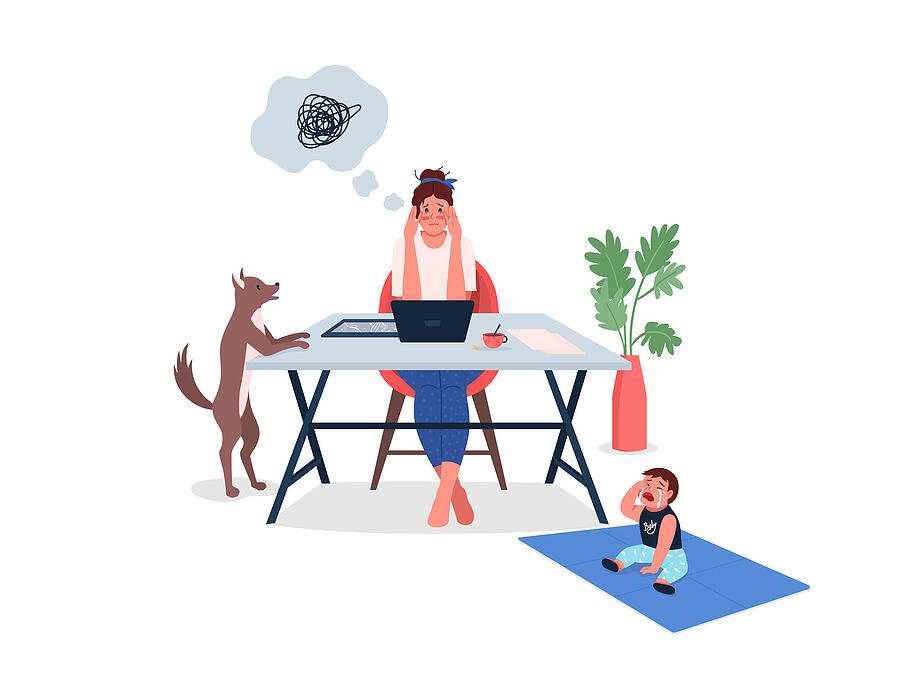
Most of us find ways to manage the demands of everyday life, often without giving much thought to whether they are still working for us. But when life throws us an unexpected challenge, there is a change in circumstance, or our responsibilities begin to outweigh what we feel able to give, we may need to stop and reconsider our approach. It’s during these times that people begin exploring life transitions counselling in Geelong.
While there is no rule book or instruction manual to equip us for life’s unfamiliar moments, we don’t have to navigate them alone. With the guidance of a trained professional, such as a Psychologist, you are better positioned to make sense of your situation, work through the obstacles you face, and identify the options best suited to helping you navigate these changes.
How does habitual conditioning create obstacles?
Habitual conditioning is a learnt response and thinking to a particular situation or stimulus and makes up the majority of our actions in our day-to-day lives.
It can be influenced by many factors including:
- Cultural and family expectations – how we grew up, the behaviours that are consistently positively reinforced in these settings, and the rituals linked to these memberships shapes how we see the world and interact with it. These influences can protect us, and reinforce a sense of connection however they can impact our capacity to see alternative pathways in times of change
- Social connections – we are influenced and our behaviours positively reinforced by the connections we invest in regularly. Going against the group is more likely to dislocate you than reinforce a state of belonging so overtime this membership can create blinders to areas of life that need addressing
- Environmental cues: for example, scrolling and looking at stories on Instagram daily conditions us to seeking instant gratification, and shortens our attention span. The bedtime scrolling or just opening the app frequently throughout your day becomes second nature to us that we fail to recognise the harm it is causing, and its influence on our environment and connections in our daily lives.
Although, habitual conditioning can serve us positively at times, when we are presented with life transitions and a need to change, it can create obstacles. One reason is that we are so programmed to react in a particular way that we firstly don’t see the issue, so we continue to repeat the behaviour that isn’t serving us. Rather than enabling us to change, it prevents us from objectively engaging other options.
Remember, when we change our habits, we form new neural circuits. This means you are consciously rewiring your brain! This is transformative, and is the essence of neuroplasticity.
Why psychology is important, before, during and after the transition
Have you ever heard yourself say, “I saw that coming”, or “I had a gut feeling but I chose to ignore it”. For many the need to change is difficult and it isn’t until we are extremely uncomfortable that we are willing to address things.
It is for this reason that engaging with a Psychologist at the earliest opportunity can play an instrumental role in how you proceed and navigate the change. Although many of us engage psychology at a stage of crisis, or extreme discomfort, it is highly advantageous to ease yourself into the change, however this also takes courage, and recognition to commence this process.
However if psychological intervention is engaged at the point of crisis, or extreme discomfort there is still a lot of benefits gained. A Psychologist offers you the objectivity at a time where there is a great deal of distress and commonly where there is less capacity to consider other options. They will work with you to see the habitual conditioning that has shaped your experiences, and how you see your options, and then will work with you to navigate through the difficult period with greater clarity, confidence and offer you a customised toolkit to assist with this transition.
Following the transition, it is also recommended to continue your engagement with psychology. Having regular touchpoints allows for you to track how you are going with implementing the change.
How a Psychologist can act as a guiding compass
Life throws us many curve balls, whether it is a redundancy from a job you thought you would stay at until retirement, sustaining a physical or mental injury, experiencing divorce or a loss of a partner. These significant events call your attention, and urge you to seek a remedy sooner than later.
Whatever life transition you’re facing, you don’t have to work through it alone. Reach out to Helen Handsjuk Psychology to explore how professional support can help you navigate the changes ahead.