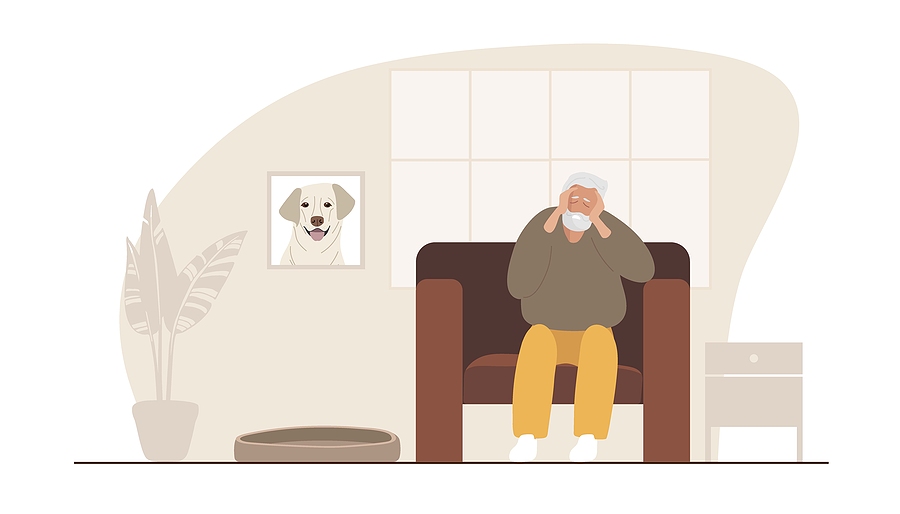
The house suddenly feels quieter. Their bed is still there. You still catch yourself listening for the familiar sound of paws across the floor and expecting a greeting at the front door when you arrive home.
If you’ve recently lost a beloved pet, you may be wondering why the grief feels so overwhelming. The answer is simple: our pets become woven into the fabric of our everyday lives. They are part of our daily routines, our relationships, and our sense of home. Our pets offer us a source of emotional regulation, security, and genuine, unconditional love. It is a love and secure attachment like no other, and a connection that, if nurtured, can last a lifetime. So when that bond is broken, the emotion that follows is real, valid, and deeply personal.
Given the significance of this bond, it is very natural for this loss to leave you with an emptiness and profound level of sadness. You may find yourself expecting them to be there, reaching for their lead out of habit, or feeling overcome by emotion at unexpected moments throughout your day. These experiences are a normal part of grief. What is important to remember during this time is to be kind to yourself and give yourself the space and time to adjust to this significant change.
Whilst many people may naturally turn to family and friends for comfort during this time, there are moments when the weight of emotion felt can lead people to seeking support from a psychologist. Seeking out such support does not diminish the love you have for your pet—it simply provides a compassionate and supportive space to make sense of your emotions, adjust to life after their departure, and honour the bond you shared. Grief counselling in Geelong offered by Helen Handsjuk provides a safe, understanding environment where those experiencing pet bereavement can feel heard, supported, and guided through their loss at their own pace.
Giving yourself permission to grieve
It is easy to be overcome with guilt after the loss of a beloved pet. Many people experience feelings of regret, question the decisions they made, or develop compassion fatigue after months or even years of providing care to their cherished companion. During this time, it is important to remind yourself that being a responsible pet guardian often means making incredibly difficult decisions in the best interests of the animal you love. You were their cheerleader in the early years, their companion throughout life, and their trusted advocate until the very end. That responsibility is never taken lightly and is rewarded so generously through the unconditional love they give us in return.
Although everyone grieves differently, there is no right or wrong way to honour your pet or navigate the emotions that follow their departure. The attachment you formed with your pet was unique, and because grief reflects the loss of that attachment, your healing journey will be unique too. What matters most is finding meaningful ways to stay connected to the love you shared while allowing yourself the space to heal.
Some gentle ideas on how you can nurture your memories include:
- Writing down the qualities your pet embodied and the lessons they taught you.
- Creating a photo album or memory book filled with your favourite moments together.
- Displaying special photographs in the places around your home where you shared the most time together.
- Writing a letter to your pet expressing your gratitude, your love, and everything they meant to you.
- Planting a tree, flower, or another living tribute in their memory.
Remember, grief is a reflection of the love and bond you shared with your pet. Rather than trying to “move on”, allow yourself to carry that love forward in a way that feels meaningful to you. Most importantly, practice daily self-compassion and treat yourself the way your pet treated you—with unconditional love and acceptance.
Life after death
What if I were to tell you that your relationship with your pet can continue, even though they are no longer physically with you? Although this may seem difficult to comprehend, it is known that our connection with those we love does not simply disappear after death. Instead, it evolves beyond physical presence. Through memories, familiar places, our senses, our emotions, and the meaning we attach to the relationship, the bond we shared with our pets can continue and even continue to evolve throughout our lives.
One of the most powerful ways to nurture this ongoing connection is through storytelling. Sharing memories with people you trust, reminiscing about funny moments, or reflecting on the lessons your pet taught you not only supports the grieving process but also strengthens your connection to the relationship you shared. As time passes, the love you have for your pet does not diminish. Instead, your understanding of what they brought to your life often deepens, allowing gratitude to gradually sit alongside grief.
Healing does not ask us to forget the relationship we had with our pet. Instead, it invites us to discover a new way of carrying that relationship forward. The love, security, and companionship they gave us become woven into our own story, shaping who we are long after they are gone.
Finding support when you’re ready
Grief changes over time, but it doesn’t always change on its own. Sometimes it helps to have someone walk alongside you as you make sense of the emotions, honour the relationship you shared, and gradually adjust to life after loss. Counselling provides a compassionate space to do just that, at a pace that feels right for you.
Guidance from a Psychologist can help you to:
- Understand why the passing of your pet feels so profound and validate the unique relationship you shared.
- Make sense of the emotional, physical, and psychological responses that often accompany loss.
- Navigate feelings such as guilt, sadness, regret, or compassion fatigue with greater self-compassion.
- Continue honouring your pet’s memory while learning to adjust to life in their physical absence.
- Feel heard and supported by someone who understands the complexities of loss, particularly if you don’t have others you feel comfortable confiding in.
With more than 40 years of clinical experience, Helen Handsjuk provides a warm, compassionate, and non-judgemental space for those experiencing the loss of a beloved pet. Whether your loss is recent or something you’ve carried quietly for some time, support is available whenever you feel ready. There is no expectation to reach out immediately, and no timeline for seeking help—only an invitation to do so if and when it feels right for you